GEO means getting your business recommended by AIs, and it rests on four pillars. This chapter defines GEO and presents the map of the four pillars, detailed in chapters 4 to 7.
What you will learn
- What GEO is, concretely
- How an AI chooses the sources it cites
- The four pillars and 12 terms to know
Lesson outline
What is GEO, in practice?
GEO (Generative Engine Optimization) means optimizing a business's online presence to increase its chances of being mentioned or recommended by ChatGPT, Gemini, Perplexity and other AI engines.
The goal is simple to state: when a customer asks an AI "Which company should I choose for…?", your business must be part of the answer.
You can already see it in the results. For the question "How much does a website cost in Quebec?", Google's AI-generated overview gives a price range and cites the sites that published detailed guides on the topic. And when someone asks a conversational assistant which firm to choose for a web application in Longueuil, the AI names specific companies and explains why. Being on that list is the new "first page of Google."
For a more detailed definition, read our article What is GEO.
How do you become visible in AI search engines?
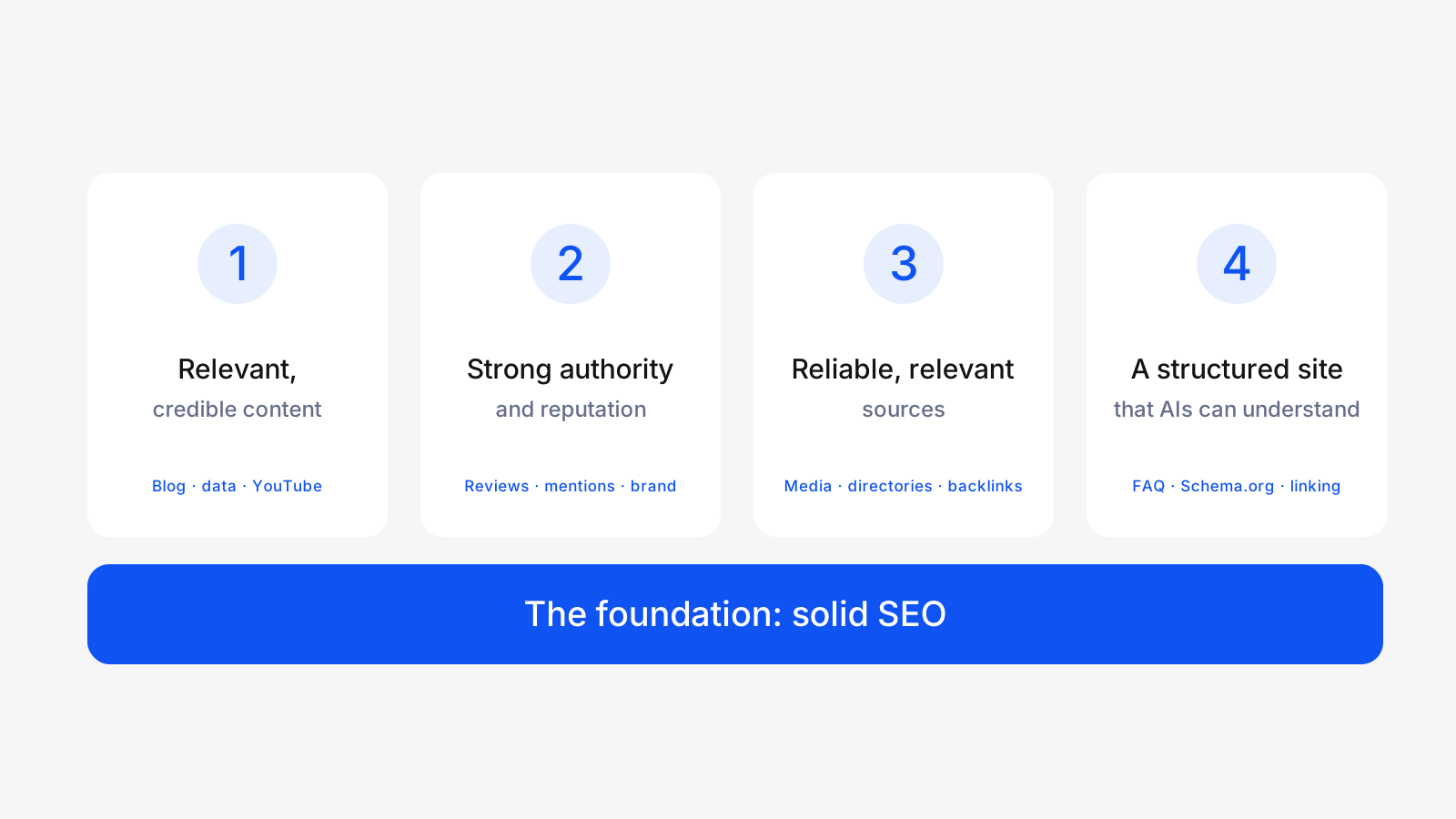
To be visible in AI search engines, a business must work on four pillars: create relevant, credible content, build its authority and reputation, be present on reliable and relevant sources, and structure its site so AIs can understand it. All of them rest on healthy SEO.
How does an AI choose the sources it cites?
An AI follows the same steps as a good recruiter: it discovers pages, accesses them, understands what they say, then evaluates whether they are reliable. Depending on the engine and the question, it relies on what it learned in training, on a live search of an index, or both. That is why each engine has its favourite sources.
Four factors keep coming up: structured content (direct answers, clear headings, lists and tables), factual consistency (same prices, same contact details everywhere), structured data (Schema.org) and easy access (robots.txt, llms.txt). A site that ticks these four boxes does not need massive traffic to be cited: it just needs to be clearer than the other sources.
GEO glossary: the 12 terms to know
These short definitions serve as a reference for the rest of the training.
| Term | Definition |
|---|---|
| GEO | Generative Engine Optimization: optimizing your presence to be recommended by AI engines. |
| SEO | Search Engine Optimization: improving your natural ranking in Google. |
| SEA | Search Engine Advertising: paid advertising in search engines. |
| LLM | Large Language Model: the language model that generates the answers (ChatGPT, Gemini, Claude). |
| AI Overview | An AI-generated answer from Google, shown at the top of results. |
| Citation | A mention of a source or business in an AI-generated answer. |
| Fan-out query | A sub-search: an AI breaks a question into several searches. |
| Backlink | A link from another site to yours, a sign of credibility. |
| DR (domain rating) | Ahrefs' 0 to 100 score for the strength of a site's link profile. |
| Schema.org | Structured-data vocabulary that states explicitly what a page is. |
| llms.txt | A file at the site root that presents the essentials to AI crawlers. |
| Agentic browsing | A PageSpeed Insights category that evaluates whether an AI agent can use a site. |
Key takeaways from chapter 3
- 1GEO aims to be part of the answer when a customer asks an AI which company to choose.
- 2It rests on four pillars: content, authority, reliable sources, structure.
- 3Each engine has its favourites, hence the importance of variety.
Among the four pillars, rate your business from 1 to 5 on each (content, authority, reliable sources, structure). The weakest pillar is your priority project.